Nurturing Calm Minds Through Nature Play at Mount Coolum Early Learning
Mindfulness for children often sounds tricky, but at Mount Coolum Early Learning, it’s part of every day in the great outdoors. When children play in our sensory gardens or splash in the water park, they’re practising simple, natural ways to stay present and calm. This early childhood mindfulness builds self-regulation skills and supports social-emotional learning in ways that last a lifetime. Let’s explore how these mindful moments shape young minds through nature-based learning.
The Power of Mindfulness in Early Years
What Mindfulness Means for Little Ones
Mindfulness for young children isn’t about sitting still for ages. It’s simply helping children notice their breath, bodies and surroundings during play. Babies and toddlers are actually natural experts at living in the moment – they’re not worrying about yesterday or tomorrow!
Research-Backed Benefits
Studies show that mindfulness practices support children in many ways:
-
Better self-regulation and emotional control
-
Improved attention spans and focus
-
Reduced stress and anxiety
-
Enhanced social skills and empathy
-
Foundation for lifelong wellbeing
Between ages 3-7, children’s brains are developing rapidly, making this the perfect time to build these skills through play and gentle guidance.
Mindfulness Activities Perfect for Early Learners
Nature-Based Mindfulness
Our outdoor spaces at Mount Coolum Early Learning create natural opportunities for mindfulness:
-
Listening Walks: Children pause to notice bird sounds, feel the breeze, and observe plants in our sensory garden
-
Nature Observation: Examining leaves, shells or flowers up close
-
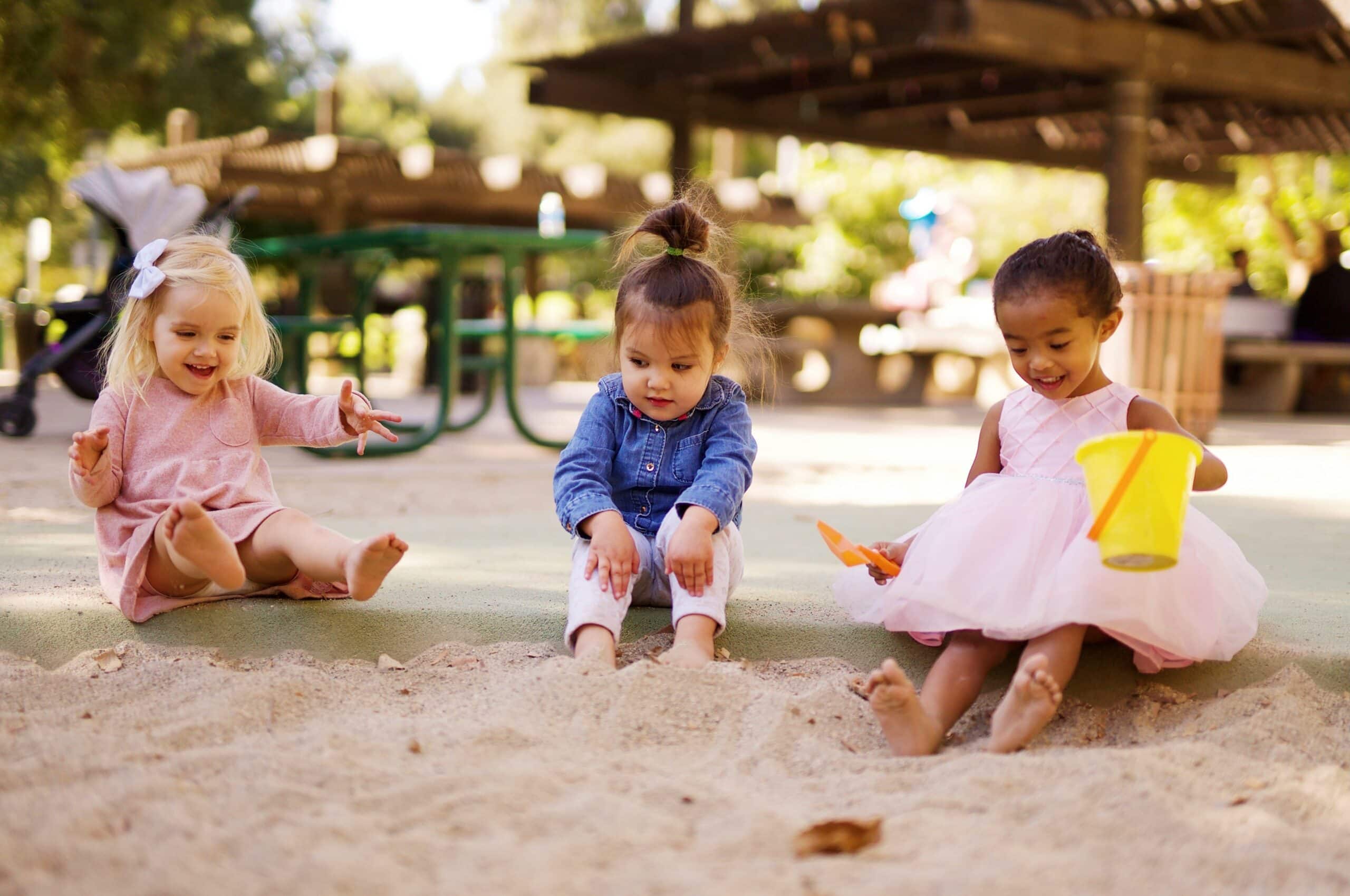
Sensory Play: Feeling sand between fingers, noticing water temperature, or squishing mud – all mindful moments!
Simple Breathing Games
-
Breathing Buddy: Placing a soft toy on their tummy to watch it rise and fall with breath
-
Balloon Breathing: Imagining filling a balloon with each inhale
-
Bubble Breathing: Taking deep breaths to blow bubbles, watching them float away
Movement-Based Mindfulness
-
Gentle Stretches: Simple yoga poses that connect body and mind
-
Slow Walking: Feeling feet touch the ground with each step
-
Free Movement: Swaying to gentle music, noticing how the body feels
Creative Mindfulness
-
Mindful Colouring: Focusing completely on the colours and shapes
-
Glitter Jars: Watching swirling glitter settle – just like our busy thoughts
-
Storybook Time: Being fully present in the world of a story
How We Practise Mindfulness at Mount Coolum
Blending with Nature Play
Our “Wild and Free” philosophy pairs beautifully with mindfulness. When children:
-
Tend to our gardens
-
Explore our bush tucker plants
-
Play on our sensory path
-
Splash in our water park
They’re naturally practising present-moment awareness.
Making It Age-Appropriate
We keep all mindfulness activities playful, brief and suited to each child’s development. Even one mindful breath before lunch or after active play can
help children learn to pause and reset.
Building It Into Daily Routines
Small moments work best:
-
Taking three deep breaths before storytime
-
Pausing to notice the feeling of sunshine during outdoor play
-
Listening to the sounds of raindrops on the roof
-
Feeling the texture of sand or water during sensory play
Benefits of Mindfulness in Early Childhood
Developing Self-Regulation Skills
Young children are just learning to manage big feelings. Mindfulness gives them tools to pause before reacting.
When a child at Mount Coolum feels frustrated about sharing a toy, we might guide them to take a deep “balloon breath” and notice how their body feels. This small pause creates space between feeling and action.
Research shows that children who practise mindfulness develop better impulse control and can calm themselves more easily. These skills help not just in the classroom but throughout life.
The brain pathways built during these early years create the foundation for emotional regulation that children will use for decades to come.
Enhancing Social-Emotional Learning
Mindfulness helps children develop awareness of their own feelings and the feelings of others. This awareness is the building block of empathy.
In our mixed-age play spaces, we encourage children to notice facial expressions and body language. “How do you think Sam feels when you share your blocks?” This simple question invites children to pause and consider another’s perspective.
Children who practise mindfulness show improved social skills, make friends more easily, and solve problems more calmly. They learn to name their feelings, which is the first step in managing them.
These social skills create a positive cycle – mindful children tend to have more positive interactions, which builds confidence and social competence.
Incorporating Mindfulness Practices at Mount Coolum
Playful Mindfulness Activities for Children
We make mindfulness fun and natural at Mount Coolum. Our educators weave these practices into everyday play rather than treating them as separate lessons.
During water play, we might ask, “How does the cool water feel on your hands?” This simple question brings children into the present moment, noticing sensations.
Our mud kitchen becomes a place for mindful awareness as children mix, pour and create. “What does the mud smell like? How does it change when you add water?”
We use the sounds of our outdoor space – birds, rustling leaves, children playing – as opportunities for brief listening games. “Let’s be quiet for a moment and count how many different sounds we can hear.”
These small moments add up, helping children build the habit of pausing, noticing, and being present.
Encouraging Educator and Parental Involvement
Mindfulness works best when adults model it too. Our educators practise taking mindful moments throughout the day, showing children that everyone needs tools for calm.
We share simple mindfulness activities with families through our newsletters and parent nights. Many parents tell us these practices help at home during challenging times like bedtime or morning rushes.
Try this at home: Before dinner, take three deep breaths together as a family. This tiny ritual creates a pause between busy day activities and family time.
Parents often notice that when they become more mindful, children naturally follow. Your calm presence is the most powerful teacher for your child.
We offer resources to help families continue these practices at home, creating consistency between our centre and family life.
When mindfulness becomes part of daily routines both at Mount Coolum and at home, children develop skills that will support them through all of life’s challenges.
Creating Lifelong Skills Through Mindful Moments
The mindfulness skills children develop at Mount Coolum Early Learning stay with them long after they leave our centre. By connecting these practices with nature play and everyday activities, we help children build natural habits of calm, focus and emotional awareness.
These aren’t just nice extras – they’re essential life skills that help children thrive now and in the future. When a child learns to pause, breathe, and notice their feelings, they’re building the foundation for healthy relationships, learning success, and emotional well-being.
We invite you to visit Mount Coolum Early Learning to see how we blend mindfulness with nature play in our beautiful outdoor spaces. Your child will develop these valuable skills while simply enjoying the magic of childhood in our nurturing environment.
Visit Mount Coolum Early Learning
Discover how we integrate mindfulness with nature play to support the whole child – body, mind, and spirit.
Address: 30 Suncoast Beach Drive, Mount Coolum, QLD 4573
Opening Hours: 6:30 AM – 6:00 PM, Monday – Friday
Website: mtcoolumearlylearning.com.au
Book a tour today to experience our beautiful, natural environment where children can be Wild and Free whilst developing essential life skills through play, exploration, and mindful awareness.
Sources and Further Reading
-
NCBI – Using Mindfulness-Based Interventions to Support Self-Regulation in Young Children: A Review of the Literature
https://pmc.ncbi.nlm.nih.gov/articles/PMC8936381/ -
Taylor & Francis Online – Exploring the Landscape of Mindfulness Practice in Early Childhood Education in Ireland
https://www.tandfonline.com/doi/full/10.1080/1350293X.2025.2453867 -
NCBI – The Impact of Mindfulness Education on Elementary School Students: Evaluation of the Master Mind Program
https://pmc.ncbi.nlm.nih.gov/articles/PMC4821437/ -
ZERO TO THREE – Mindfulness in Early Childhood
https://www.zerotothree.org/our-work/mindfulness-in-early-childhood/ -
ResearchGate – Mindful Awareness in Early Childhood Education
https://www.researchgate.net/publication/306921632_Mindful_awareness_in_early_childhood_education -
Springer – Using Mindfulness-Based Interventions to Support Self-Regulation in Young Children
https://link.springer.com/article/10.1007/s10643-022-01333-2 -
ScienceDirect – Social Behaviour Changes via Mindfulness Practices in Early Childhood
https://www.sciencedirect.com/science/article/abs/pii/S0190740924000240 -
Wiley Online Library – The Implementation of Mindfulness in Early Childhood
https://onlinelibrary.wiley.com/doi/full/10.1111/mbe.12399 -
Child Care Aware – Cultivating Mindfulness in Early Childhood Programs and Family Environments
https://ks.childcareaware.org/mindfulness/ -
Raising Children Network – Mindfulness Activities: Kids & Families
https://raisingchildren.net.au/guides/activity-guides/wellbeing/mindfulness-activity-children-parents -
Teach Starter – 5 Minute Classroom Mindfulness Activities for Kids
https://www.teachstarter.com/au/blog/classroom-mindfulness-activities-for-children/ -
Brightwheel – Nurturing Mindfulness for Children in Early Education
https://mybrightwheel.com/blog/mindfulness-for-kids -
Calm Hearts Mindfulness – Preschool Programs (Australian Provider)
https://calmheartsmindfulness.com.au/programs/preschools -
First Chance For Children – 6 Activities to Introduce Mindfulness to Young Children
https://firstchanceforchildren.org/6-activities-to-introduce-mindfulness-to-young-children/ -
ZERO TO THREE – Mindfulness Practices for Families
https://www.zerotothree.org/resource/mindfulness-practices-for-families/