Every year, as the new school term kicks into gear, the back-to-school shopping lists begin circulating. Branded backpacks, colour-coded folders, the perfect lunchbox with five compartments, a pencil case stocked with every shade of the rainbow. Shopping centres fill with families navigating trolleys piled high with stationery, and social media fills with flat-lay photographs of neatly arranged school supplies.
It is all very charming — and some of it is genuinely useful. But at Mount Coolum Early Learning, we want to offer families something the shopping catalogues never will: an honest, grounded, developmentally informed perspective on what actually matters when your little one is preparing for kindergarten.
For families beginning to think ahead to the 2026 school year, March is actually a wonderful time to start — not by hitting the shops, but by reflecting on where your child is developmentally and what the remaining months can offer in terms of genuine, meaningful preparation.
The short version? The most important things you can give your child before they start school cannot be bought at any shop on the Sunshine Coast.
The Kindergarten Readiness Conversation We Need to Have
School readiness is one of the most misunderstood concepts in early childhood education. It is frequently reduced to academic benchmarks — can they write their name? Do they know their letters? Can they count to twenty? — when the research tells a far more nuanced and encouraging story.
The Transition to School: Position Statement, developed collaboratively by Early Childhood Australia and the Australian Research Alliance for Children and Youth, identifies school readiness not as a fixed checklist of skills but as a dynamic, multidimensional state of being. A ready child is emotionally regulated, socially connected, physically healthy, curious, and supported by a family and community that values learning.
None of those things comes in a box from the stationery aisle.
This does not mean the practical preparations do not matter — they do, and we will get to them — but it means holding them in their proper proportion. A child who can regulate their emotions, follow a simple routine, express their needs, and engage with other children is far better prepared for the kindergarten classroom than one who can recite the alphabet but dissolves at the first moment of frustration or separation.
What Actually Matters: The Non-Negotiables of Kindergarten Prep
Emotional Regulation and Resilience
The single most reliable predictor of a smooth kindergarten transition is a child’s capacity to manage their emotions with some degree of independence. This does not mean never crying or never struggling — it means having enough emotional vocabulary and self-awareness to recognise big feelings, tolerate discomfort for short periods, and seek help from a trusted adult when needed.
Emotional regulation is built through years of co-regulation — the patient’s repeated experience of having a calm, attuned adult help a child move through distress and return to equilibrium. It is built in bedtime routines, in the way you respond when your child is frustrated, in the stories you read together, and in the thousands of small emotional moments that make up family life. It cannot be purchased, and it cannot be rushed. But it can absolutely be nurtured, every single day between now and the first day of school.
With the school year already underway and Term 1 in full swing, March is a particularly rich time to observe how your child is settling — how they manage transitions, how they recover from big feelings, and how they are growing in their capacity to cope with the rhythms of a structured day. These observations are invaluable guides to what the remaining months of preparation can focus on.
Independence in Self-Care
Kindergarten classrooms move at a pace that requires children to manage several self-care tasks with reasonable independence. Can your little one put on and take off their shoes? Manage their own clothing after toileting? Open and close their lunchbox? Carry their own bag? These practical skills matter enormously — not because kindergarten teachers will not help, but because a child who can manage these tasks independently arrives in the classroom with their cognitive and emotional resources free for learning and connection, rather than consumed by the stress of needing help with basics.
The single best way to build these skills between now and the start of the 2026 school year is to step back and let your child practise — even when it is slower, messier, and more frustrating than simply doing it for them.
Communication and Language
Kindergarten is a language-rich environment. Children who arrive with strong expressive and receptive language — who can communicate their needs, follow multi-step instructions, engage in back-and-forth conversation, and narrate their experiences — have a significant advantage in every dimension of the school day, from literacy to friendship to navigating conflict.
Language is built through conversation, story, and rich shared experience. Read together daily — not just picture books, but longer stories that stretch vocabulary and attention. Talk during car trips, mealtimes, and walks along the Sunshine Coast beaches. Ask questions that require more than a yes or no answer. Narrate your day together. These habits, maintained consistently across the months remaining before school, build the language architecture that underpins everything else.
Gross and Fine Motor Development
The physical development that happens in early childhood — climbing, running, jumping, balancing, digging, drawing, threading, cutting, and building — is the foundation upon which formal academic skills are built. A child who has spent years climbing trees, running on sand, and manipulating playdough has developed the core strength, hand control, and hand-eye coordination that make pencil grip and sitting at a desk manageable rather than exhausting.
This is one of the most important reasons we prioritise outdoor play and nature-based learning at Mount Coolum Early Learning. The beach environment of the Sunshine Coast is an extraordinary developmental resource — uneven terrain, sand, water, rocks, and open space all challenge and strengthen the body in ways that support school readiness far more effectively than any workbook. March’s cooler, gentler weather makes it a particularly wonderful time to maximise outdoor time together.
Social Skills and the Art of Belonging
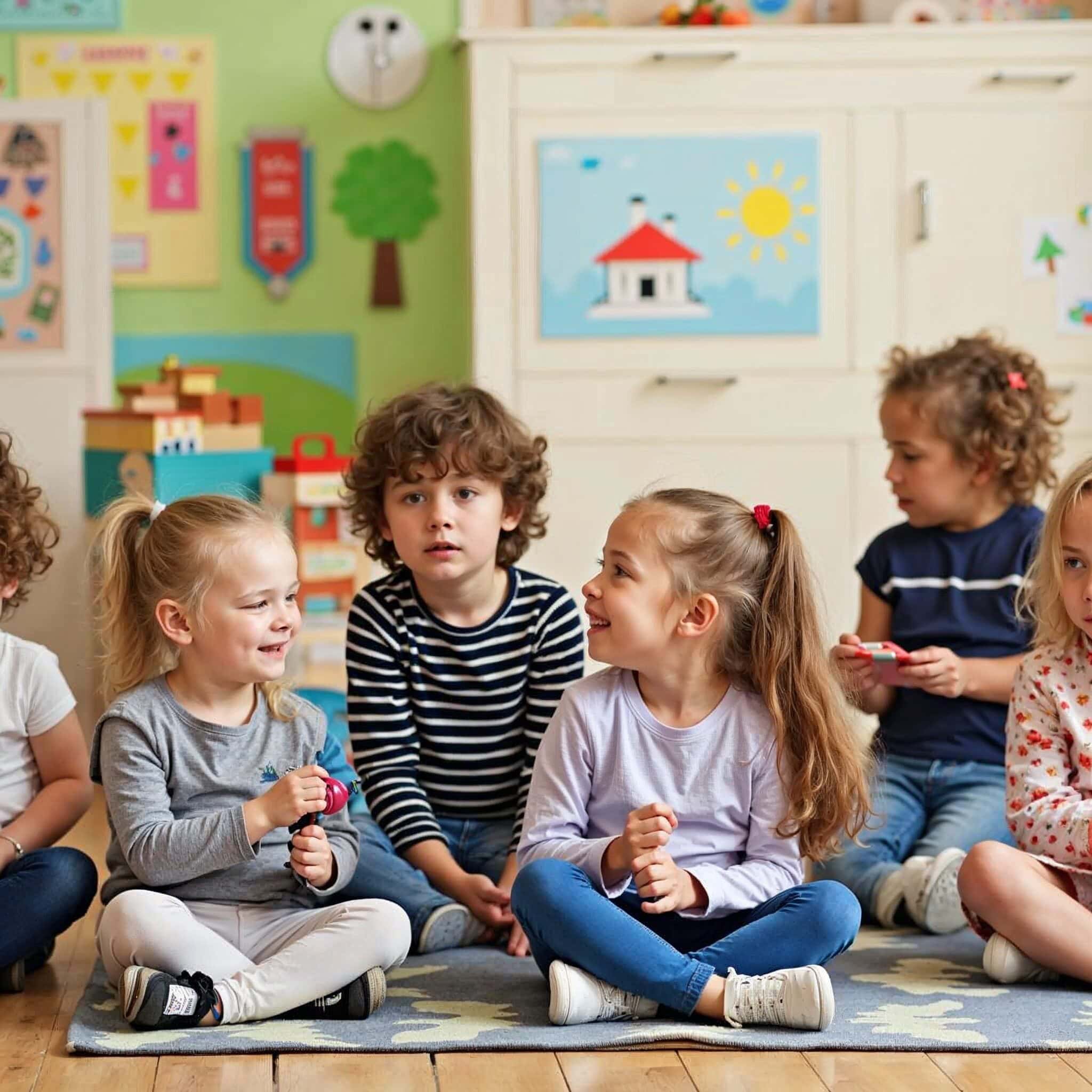
Kindergarten, at its heart, is a social experience. Children who have had rich experience playing alongside others — navigating disagreement, taking turns, joining a group, managing exclusion, and forming genuine friendships — are far more likely to settle happily and quickly into the social world of a school classroom.
March offers a wonderful window for this. As the excitement of the new year settles and children find their footing in their current groups and friendships, the social learning happening right now — at the centre, at the park, at community activities — is directly and meaningfully building the social confidence your child will carry into kindergarten.
A Positive, Curious Attitude Toward Learning
Perhaps the most precious gift you can nurture in the lead-up to school is a child who genuinely loves finding things out. Curiosity — the desire to understand, explore, question, and discover — is the engine that drives all learning. It is built not by drilling academic content but by following a child’s interests with enthusiasm, making time for exploration and wonder, and modelling the kind of open, joyful engagement with the world that says learning is one of life’s great pleasures.
Now, the Shopping List: What Is Actually Worth Buying
With all of that said, there are practical purchases worth making, and making well. For families planning ahead for the 2026 school year, March is actually a smart time to think about these — before the January rush, with plenty of time to trial items and build familiarity before the big day.
A Backpack That Fits
This one genuinely matters. A backpack that is too large, too heavy, or poorly designed for a small body creates real postural and physical strain. Look for a bag with padded, adjustable straps, a size appropriate to your child’s frame, and enough compartments to keep things organised without being complicated. It does not need to be expensive or branded — it needs to fit your child’s body and be easy for them to manage independently.
A Lunchbox Your Child Can Open
This sounds obvious, but it is worth testing well before school starts. Sit your child in front of their new lunchbox and watch them open and close every component independently. Many lunchboxes that look wonderful are genuinely difficult for small hands to manage, which means lunch goes uneaten and a child arrives home hungry, tired, and dysregulated. Buying now means your child has months to practise and become completely confident with it. Simplicity wins every time.
A Water Bottle That Works
Hydration has a direct and measurable impact on children’s cognition, mood, and physical endurance throughout the school day. Choose a bottle that is leakproof, durable, and easy for your child to open and close without assistance. Label it clearly. Send it to school every single day.
Appropriate Footwear
Shoes that fit well, fasten simply, and support physical activity are genuinely important. If your school allows it, velcro fastening shoes make a significant practical difference for children who are still developing shoe-tying dexterity. Comfort and function matter far more than appearance.
Sun Protection for the Sunshine Coast
In our glorious but intense Queensland sun, sun safety is not optional — and in March, with summer only recently behind us, UV levels remain very high on the Sunshine Coast. A broad-brimmed hat that meets school requirements and SPF50+ sunscreen that your child is comfortable having applied are essential items. Practise applying sunscreen at home now so it becomes a familiar, comfortable routine long before school starts.
Labelling Everything
This is less glamorous than the rest of the list but possibly the most practically important entry on it. Label every item that goes to school — every item of clothing, every piece of equipment, every drink bottle and lunchbox component. Lost property boxes in Queensland primary schools are legendary in their volume. A labelled item has a fighting chance of finding its way home.
What You Do Not Need to Buy
A word on what the catalogues will tempt you toward but your child genuinely does not need: elaborate stationery sets beyond what the school specifically requests, character-branded merchandise at premium prices, educational workbooks designed to pre-teach formal literacy and numeracy, and expensive technology items for a child who is not yet in school.
The workbook question is worth pausing on. Many well-meaning families spend the months before school working through formal letter formation and number exercises with their children, believing this gives them a head start. The research does not support this. What it consistently supports, instead, is play — rich, varied, self-directed, outdoor, creative, social play — as the most effective preparation for the academic demands of the school years.
If your child wants to draw, let them draw. If they want to make up stories, write them down together. If they want to count shells on the beach at Mount Coolum, count with them. If they want to dig in the garden and plant seeds and watch them grow, get your hands dirty alongside them. That is kindergarten preparation. That is the real curriculum of the early years — and March, with its still-warm weather and long afternoons, is a beautiful time to lean into all of it.
The Most Important Thing You Can Do Right Now
Beyond all the shopping and the skills and the preparation, the single most important thing you can do for your kindergarten-bound child this March is this: help them feel safe, excited, and confident about what is ahead.
Talk about school with warmth and positive anticipation. Visit the school grounds if you can, so the physical environment becomes familiar well before the first day. Read stories about starting school. Connect with other families who have children beginning at the same time. Address your little one’s questions and worries honestly and calmly — including your own, because children are exquisitely attuned to parental anxiety, and the steadier you feel, the steadier they will be.
And know that the work you have already done — the bedtimes, the meals, the stories, the park visits, the conversations in the car, the moments of comfort and connection — has been preparing them all along. You have already given them more than any shopping list could.
We Are Here to Support Your Family Through This Season
At Mount Coolum Early Learning, supporting families through the transition to school is one of our greatest privileges and most important responsibilities. Our educators work closely with families across the year to ensure every child leaves our care feeling confident, capable, and genuinely ready for the adventure ahead.
If you have questions about your little one’s readiness, would like to discuss their individual developmental journey, or simply want to talk through the transition with an experienced early childhood educator, please reach out. We are always here, and we would love to hear from you.
📞 07 3063 3718 📍 30 Suncoast Beach Drive, Mount Coolum 4573 🕐 Monday – Friday, 6:30am – 6:00pm 🌐 mtcoolumearlylearning.com.au
Sources
- Early Childhood Australia & Australian Research Alliance for Children and Youth – Transition to School: Position Statement https://www.earlychildhoodaustralia.org.au/our-work/transition-to-school
- Australian Children’s Education & Care Quality Authority (ACECQA) – Belonging, Being & Becoming: The Early Years Learning Framework for Australia (EYLF V2.0) https://www.acecqa.gov.au/sites/default/files/2023-01/EYLF-2022-V2.0.pdf
- Queensland Curriculum & Assessment Authority (QCAA) – Queensland Kindergarten Learning Guideline https://www.qcaa.qld.edu.au/kindergarten/guidelines
- Australian Institute of Family Studies (AIFS) – School Readiness: What Does It Mean and How Can Families Help? https://aifs.gov.au
- Raising Children Network – School Readiness: Skills, Development and Preparation https://raisingchildren.net.au/school-age/school/starting-school/school-readiness
- Dockett, S. & Perry, B. – Starting School: Perspectives, Programmes and Practices (Paul Chapman Publishing, 2007) https://au.sagepub.com
- Shonkoff, J. & Phillips, D. (Eds.) – From Neurons to Neighbourhoods: The Science of Early Childhood Development, National Academy Press (2000) https://www.nap.edu/catalog/9824
- Cancer Council Queensland – Sun Safety for Children and Schools https://www.cancerqld.org.au/cancer-information/preventing-cancer/sun-safety
- Zero to Three – School Readiness and the Whole Child https://www.zerotothree.org
- Mount Coolum Early Learning – Our Approach to School Readiness and Transition https://mtcoolumearlylearning.com.au